Key takeaways
- Gutters should slope slightly toward downspouts.
- Five- and six-inch sizes handle most homes.
- Downspouts should discharge away from the foundation.
- Clogs and sagging cause most failures.
Sizing and slope
Most homes use five-inch gutters, and larger roofs or heavy rain areas often benefit from six-inch gutters and larger downspouts. A slight slope toward the downspouts keeps water moving.
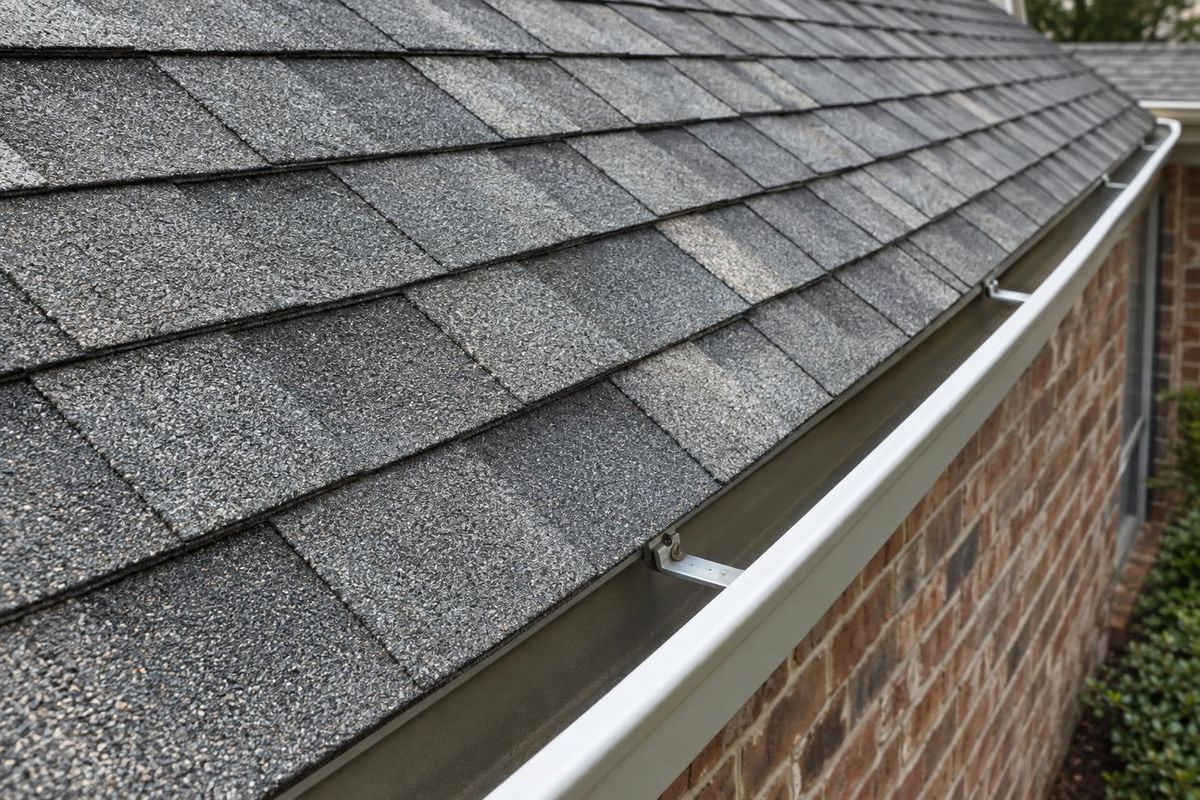
Hangers should be spaced closely enough to prevent sagging.
Downspouts and discharge
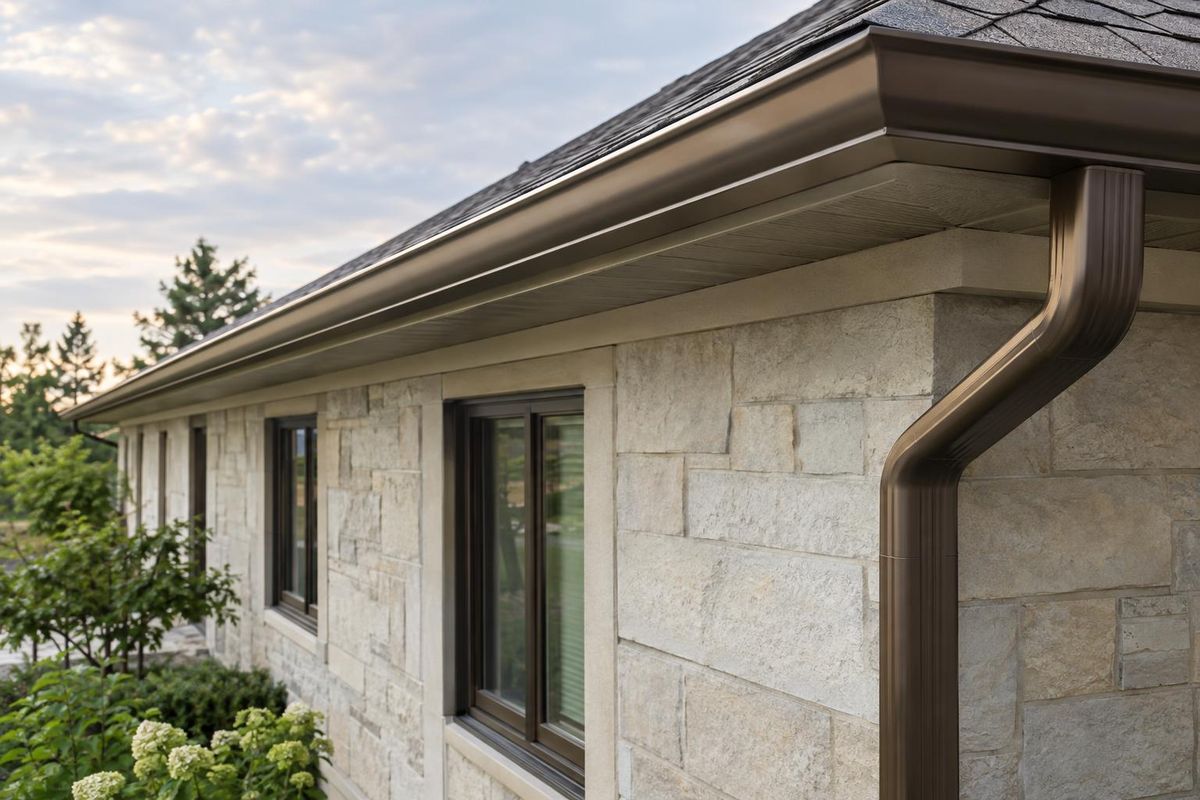
Downspouts should carry water well away from the foundation, by extensions, splash blocks or underground lines.
Water near the foundation can cause settling and leaks.
Common problems
Clogged gutters, loose hangers, leaking seams and pitched-wrong runs cause overflow. Overflow damages fascia and siding.
Seamless gutters reduce leak points.
Upgrades
Gutter guards, bigger downspouts and seamless gutters solve many problems. Roof replacements are a good time to upgrade gutters and fascia.
A roofer can check the roofline.
Quick answers
Do I need gutters?
Most homes benefit from them. They protect the roof edge, siding, landscaping and foundation.
How do I know if my gutters are sloped right?
After rain, look for standing water. Water should drain toward the downspouts.
Can gutters be added later?
Yes. They can be installed on most homes at any time.