Key takeaways
- Cool air enters low at the soffits.
- Hot, moist air leaves high at the ridge.
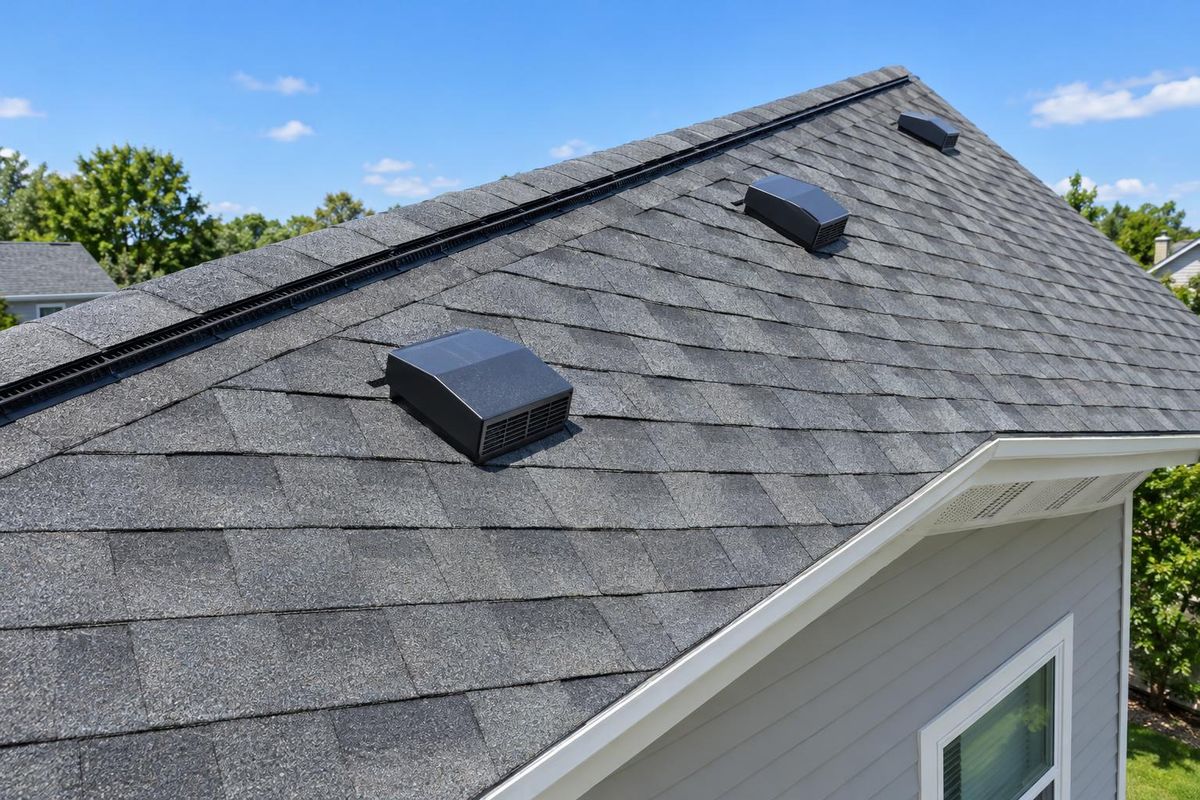
- Mixing vent types can break the airflow.
- Insulation must not block the air path.
Intake and exhaust
Ventilation works when air flows in at the lowest part of the roof and out at the highest. Soffit vents supply intake, and ridge vents or box vents provide exhaust.
The amount of intake and exhaust should be balanced.
Common problems
Blocked soffits, missing baffles, too few vents and mixed exhaust types can leave attics hot and damp.
Symptoms include mold, rusted nails and early shingle wear.
Insulation and airflow
Insulation reduces heat flow into living space, while ventilation clears moisture and heat from the attic. Baffles keep insulation from blocking soffit vents.
Air sealing ceilings helps too.
When to upgrade
A roof replacement is the best time to improve ventilation, since vents can be added or replaced easily.
A roofer can evaluate the attic first.
Quick answers
Do I need a ridge vent?
It is a popular exhaust option because it works along the whole ridge. The best choice depends on your roof.
Can too much ventilation be a problem?
Unbalanced systems can pull conditioned air or weather in. Balance matters.
Does ventilation affect shingle life?
Yes. Heat and moisture in the attic can shorten roofing life.