Key takeaways
- Check the ground and gutters first, then ask for an inspection.
- Hail leaves bruises and loose granules, not always holes.
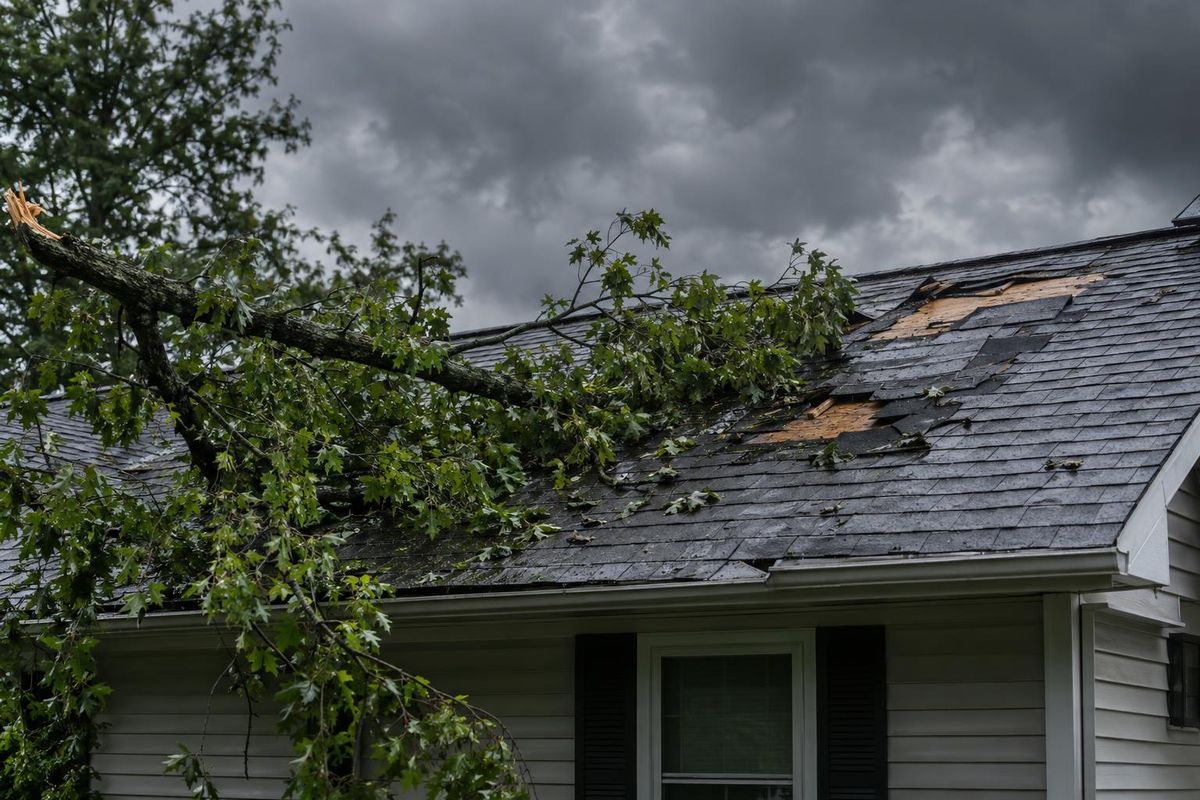
- Wind lifts and tears shingles and drives rain under them.
- Document damage before repairs begin.
Right after a storm
Walk the yard and look for shingle pieces, metal and debris. Check gutters and downspouts for granules and dents. Look inside for ceiling stains.
Stay off the roof, since wet roofs are slippery.
What hail and wind do
Hail bruises shingles and knocks off granules, dents metal and cracks vents. Wind lifts tabs, breaks seals and tears shingles away.
Damage often shows up as leaks weeks or months later.
First steps
Photograph what you see, protect the home from more water with a tarp if there is an opening and call a roofer for an inspection.
Keep receipts for temporary repairs.
Working with your insurer
Contact your insurance company, and share the photos and roofer's documentation. Coverage decisions are your insurer's.
Ask what your policy requires for repairs.
Quick answers
Can hail damage a roof without leaks?
Yes. Bruises and granule loss shorten roof life even if nothing leaks yet.
Should I climb up to check?
No. Use binoculars or a drone, or ask a roofer for an inspection.
How soon should I get an inspection?
As soon as practical after a storm, since small damage can get worse.